Fourth Wing Board Game: Rise of the Wingleader
How to play the Fourth Wing board game Rise of the Wingleader by Goliath: setup, the play, claim and fold actions, signet unlocks, injuries, and winning.
FAQ
Do you need to read Fourth Wing before playing the board game?
How many players is Rise of the Wingleader, and how long does it take?
How does the solo mode work?
Is this board game connected to the Dragonkind browser game?
What are the four crest colors in the game?
When did the Fourth Wing board game come out?
How Do You Play the Fourth Wing Board Game?
Rise of the Wingleader is the official tabletop take on Fourth Wing, and it plays nothing like the browser experience: this is a competitive game of crests, allies, and glory hunting at Basgiath War College. The rules video embedded below teaches the full multiplayer game in about ten minutes, and this page condenses that teach into a written reference with screenshots.

Fourth Wing: Rise of the Wingleader - How to Play (Meeple University)
The short version: this is Goliath’s board game set in the world of Fourth Wing, built on four pillars — Strength, Agility, Cunning, and Connection. Retailer listings put it at one to five players, ages 14 and up, with games of roughly 30 to 60 minutes, and the rules video notes that the standard box includes a solo mode. Each round you play ally cards for crests, claim reward tokens when you strictly lead a color, or fold to reset your hand, while face-down signets and a metal dragon bookmark round out the components.
What the Game Is About
Players are cadets who want more than graduation: the goal is to rise to the rank of Wingleader. The premise mirrors the books — you cannot climb alone, so ally cards represent characters and dragons from the series, and rounds resolve as scenes from the story. Goliath’s announcement names the four pillars as Strength, Agility, Cunning, and Connection, and our screenshots show event cards titled Saving Andarna and Looking for Allies.
Glory is the currency of victory. Claiming tokens moves your dragon marker along the track around the board, and as soon as any player completes a lap, the current round finishes and the cadet with the most glory wins. If the world itself is what you came for, our guide to Threshing Day explains the in-universe event the game borrows from.
Two clarifications, because search results get crowded: this is not the free Dragonkind browser game, which is a choose-your-path website experience, and it is also not Priorities: Fourth Wing Edition, the separately licensed party card game in which one player acts as Wingleader. This page covers only the Goliath board game.
Components and Setup
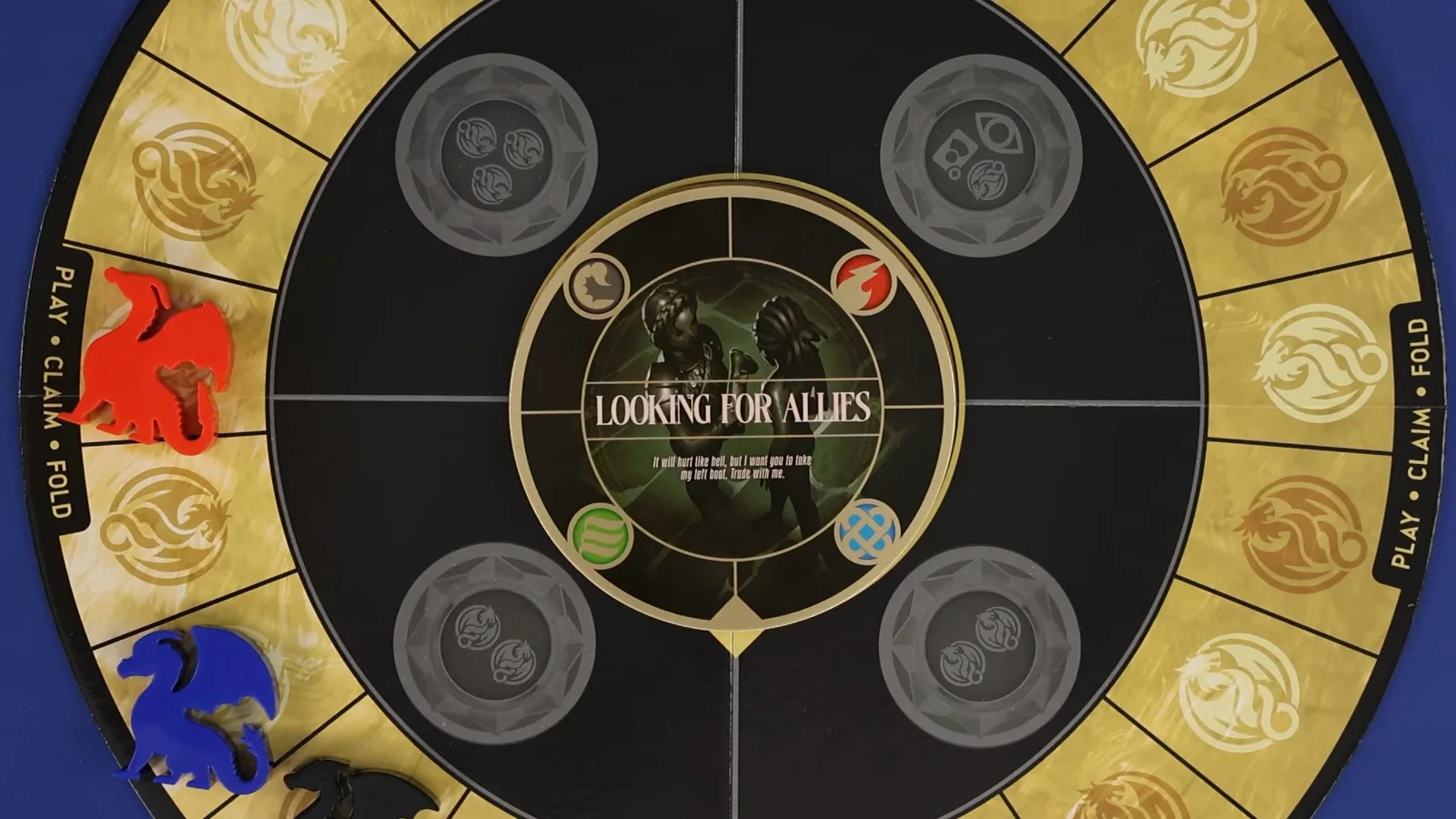
The standard box contains everything shown in the video: a circular playing field with a glory track around the edge and the words PLAY, CLAIM, FOLD printed on the rim; a deck of event cards; four claim tokens; a dragon marker per player; the ally deck; a supply of injury tokens; a set of eye-shaped signet cards; and a metal dragon bookmark that serves as the first-player marker.
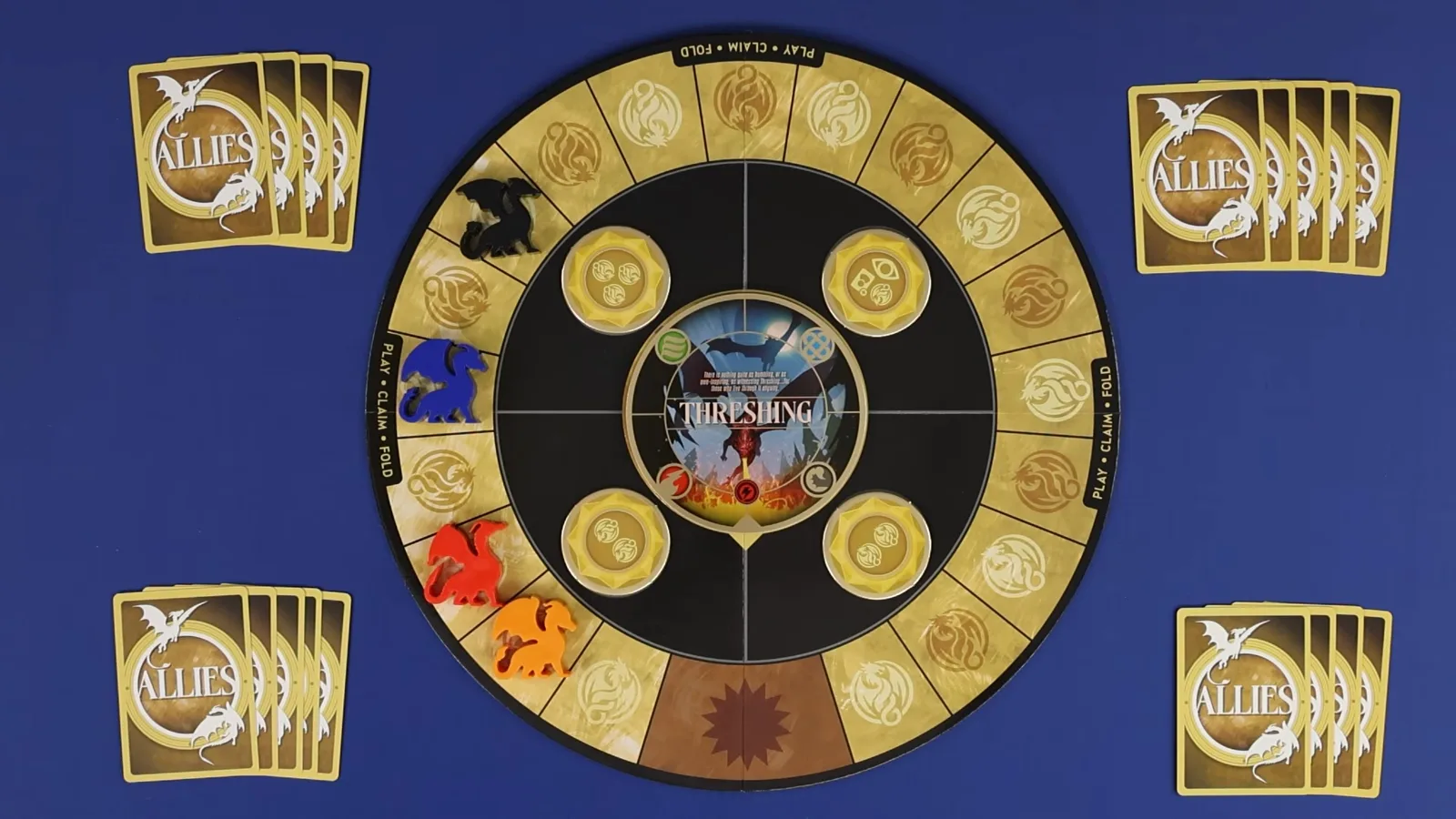
The field after setup.
Setup follows the video in this order:
- Lay out the field and shuffle the event deck into the center space.
- Place one claim token in each of the four quadrants around the board.
- Each player chooses a color and puts their dragon marker on the starting space.
- Shuffle the ally deck and deal each player a starting hand of five cards.
- Keep the injury tokens within reach of the table.
- Shuffle the eye-shaped signet cards and deal one face down to each player — do not look at it. Just like a signet in the books, you do not know what yours is until it unlocks.
- Pick the first player and hand them the metal dragon bookmark.
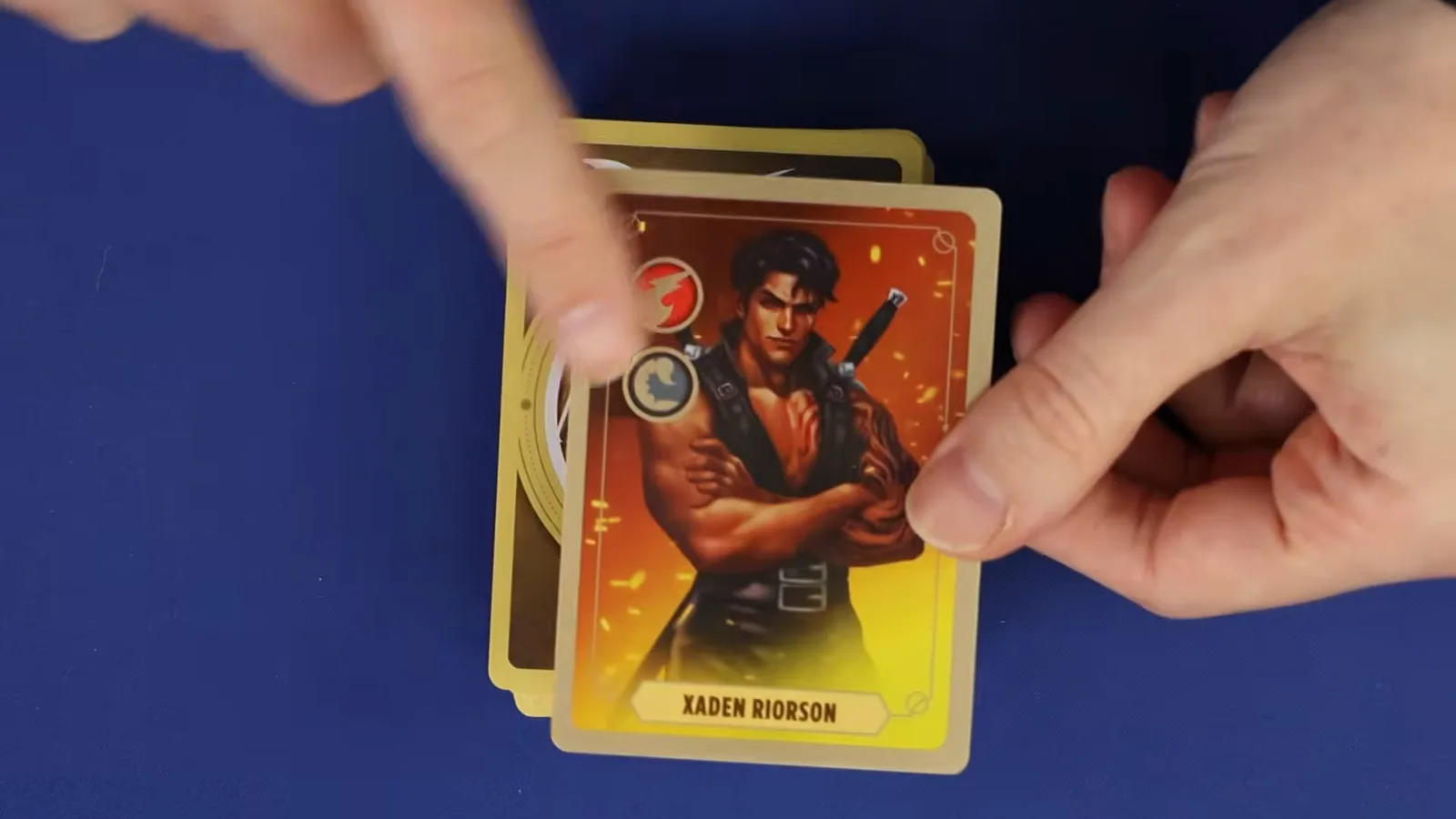
Drawing from the ally deck.
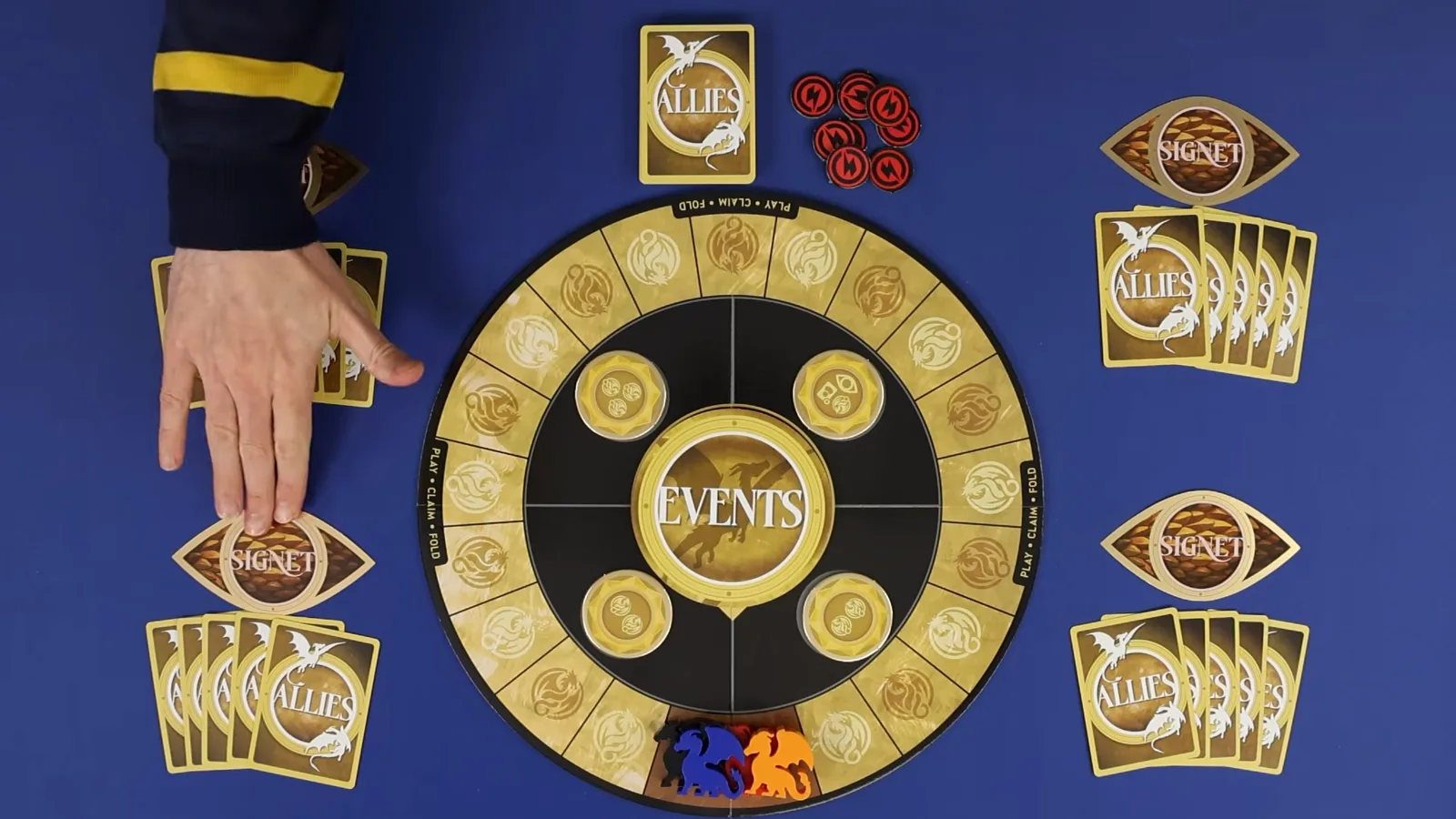
Face-down signets during setup.
How a Round Works
Each round plays out as a single event. Turn over the top event card and set it face up in the center so its notch matches the notch on the field. The card carries the four crest icons around its quadrants in a random order, and that layout decides which crest maps to which claim token for this round. Strength is the red crest, Connection the blue one, Agility the green one, and Cunning the black one.
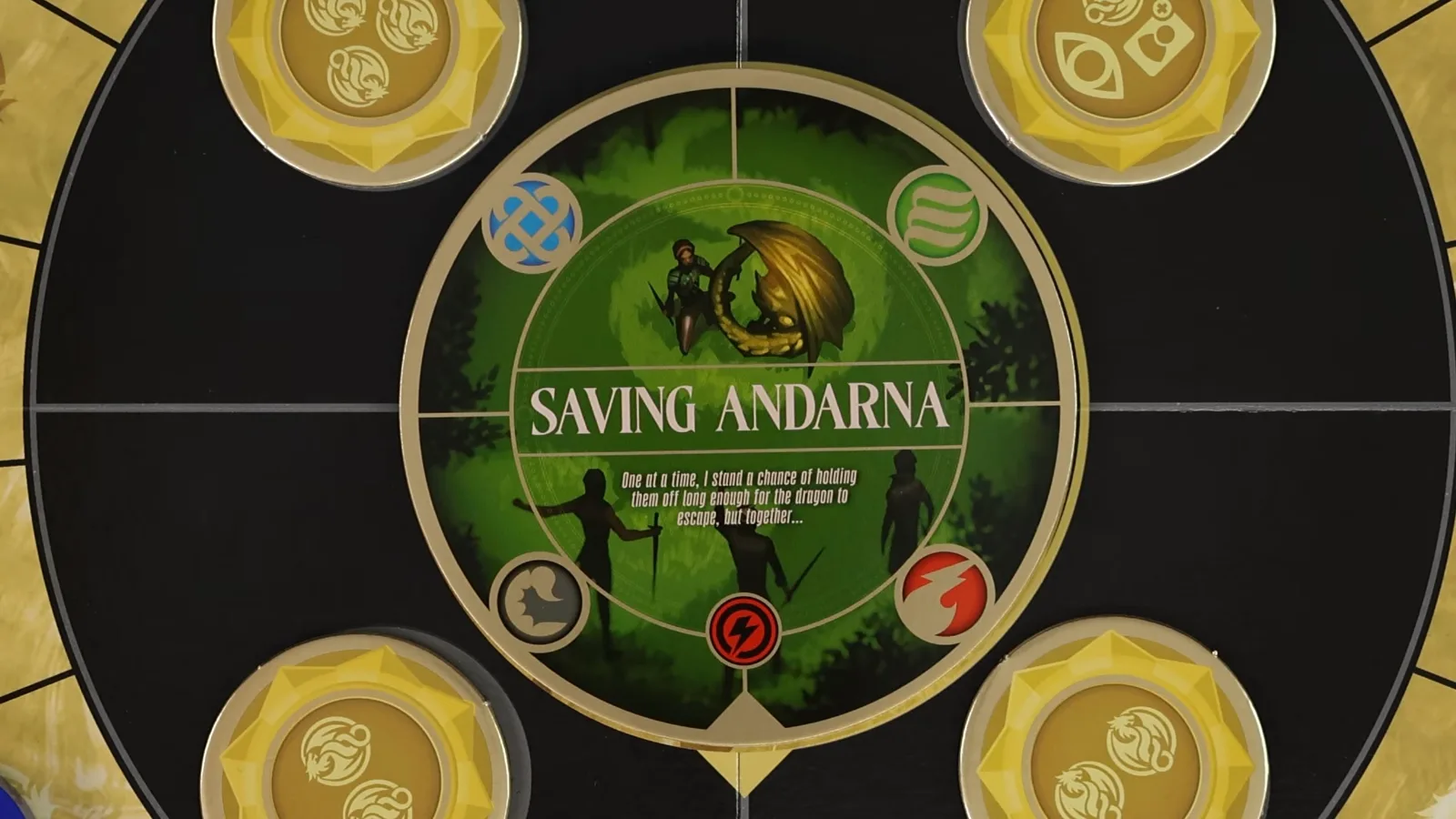
An event card mid-round.
Starting with the first player and moving clockwise, each cadet takes one action on their turn: play, claim, or fold. Passing is not allowed.
Play: Add Crests in Front of You
Playing means laying cards face up in front of you, and there are exactly three legal ways to do it: one card with two crests in its corners, two cards that each carry two crests, or a single card with three crests. Every play therefore adds two to four crests to your table area, and those cards stay there until you leave the round.
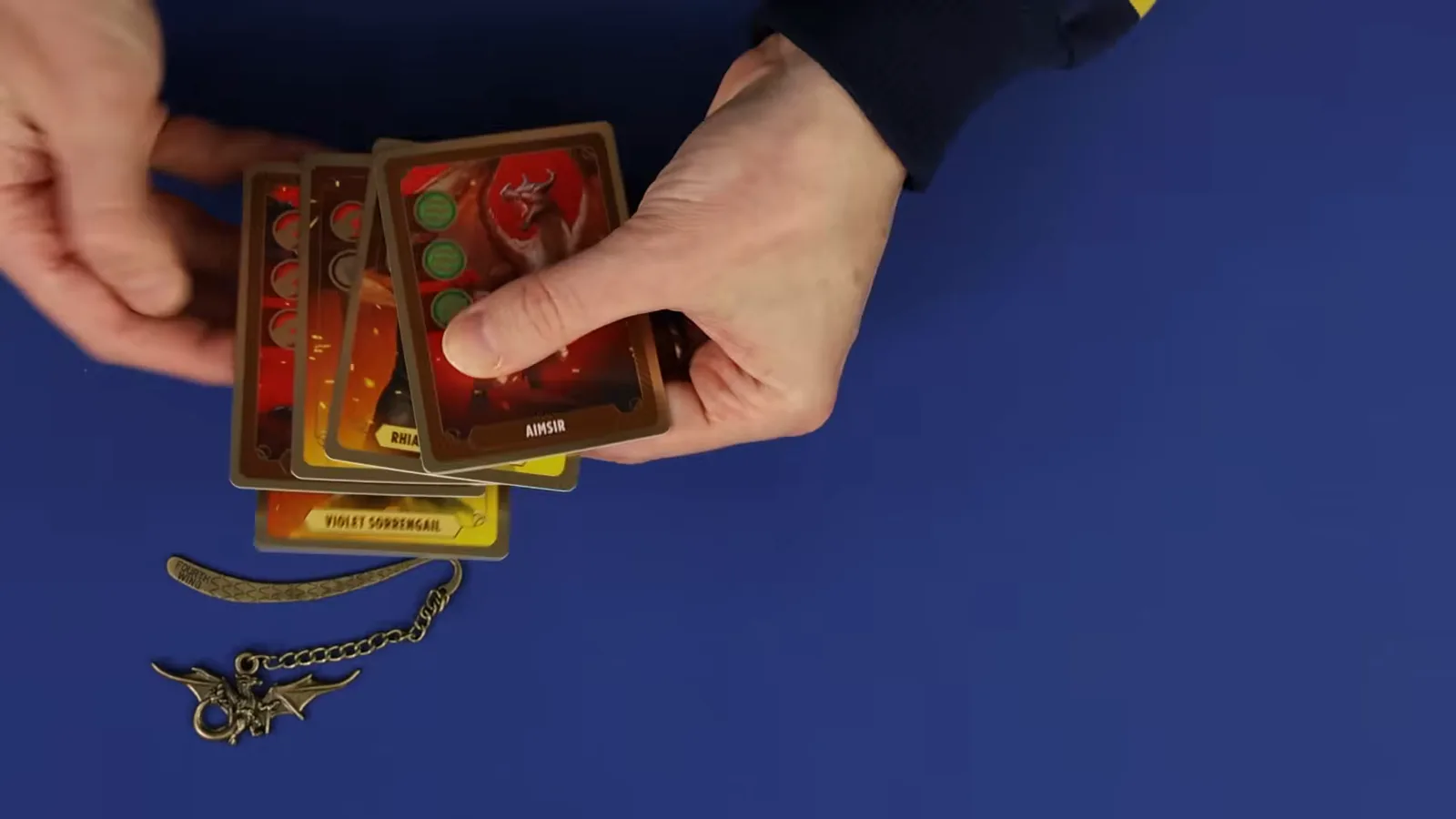
A cadet’s hand of allies.
The artwork is flavor; only the corner emblems count. If your hand is empty, play is off the table for that turn.
Claim: Take Tokens You Strictly Lead
At the start of your turn, count your crests of each color against every opponent. If you hold strictly more of a color than each other player — ties fail — you may claim that color’s token. Claiming is optional: you can keep playing cards instead, but if you claim, you must take every token you qualify for.

Counting crests before a claim.
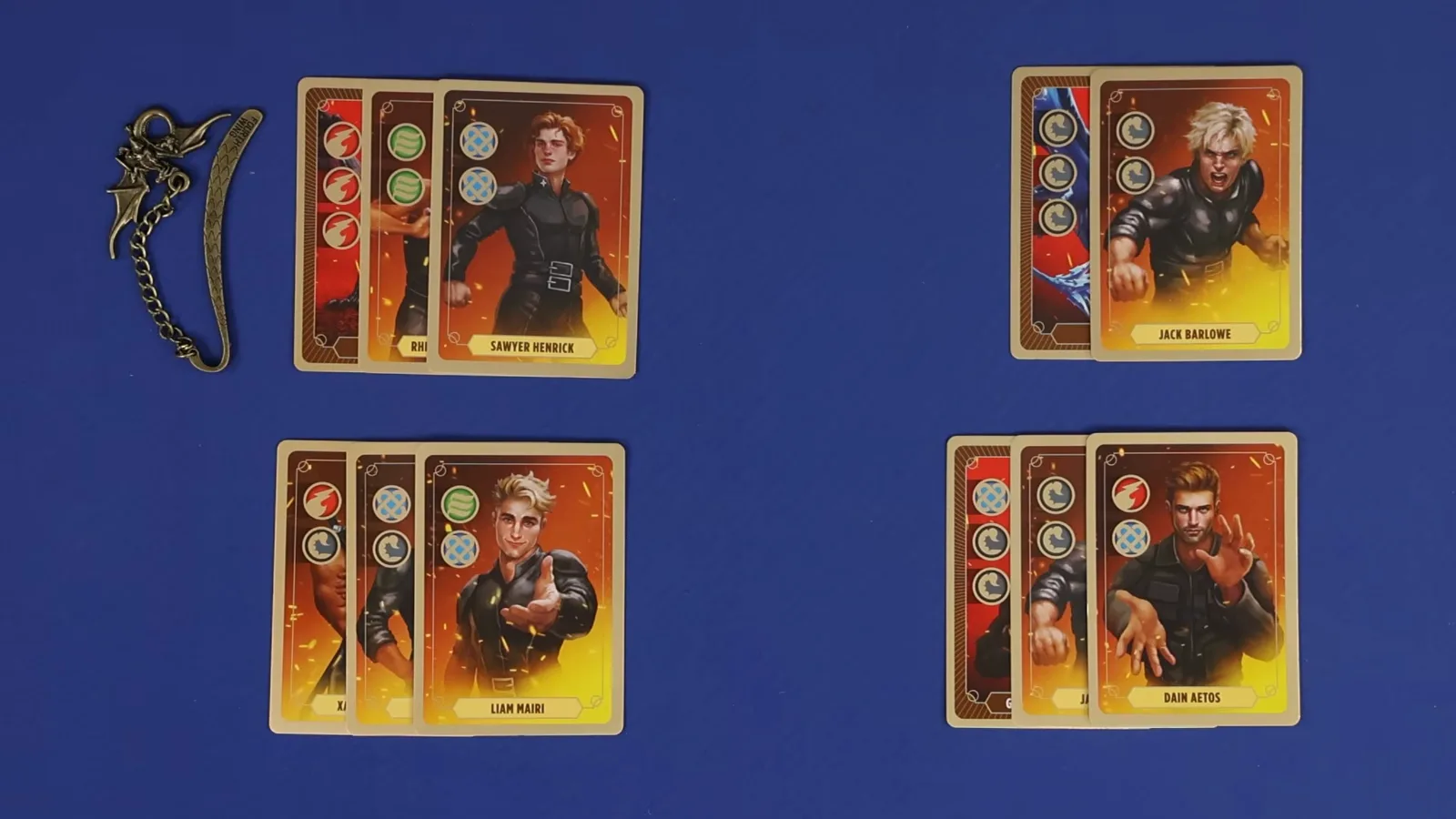
The strictly-the-most check.
The video’s example shows how strict the rule is: the first player’s three red crests beat the table’s zero, one, and one, and their two green crests also lead outright, but two blue crests against two ties — and ties cannot claim. Most claim tokens grant two glory; one token grants three; and the eye-marked token grants one glory plus a new ally card, and it unlocks your signet if it is still face down.
Claiming ends your participation in the round. Discard every card in front of you and skip your turns until the next round begins, with two catch-ups to remember: your discarded crests no longer count against anyone’s comparison, and the colors you took cannot be claimed again by anyone this round.
Fold: Reset Your Hand and Sit Out
Folding means discarding your cards, taking back the ones you played this round into your hand, and sitting out the rest of the round without any claims. You can fold voluntarily — a bigger hand is the reward — or you can be forced into it when no legal action remains. Folding is not free on dangerous events: if the event card shows the red bolt icon, a fold costs one injury token.
Signets and Injuries
The signet cards are the game’s nod to rider powers. They are dealt face down at setup, shaped like an eye, and they stay hidden until you claim the eye-marked token — described as the Connection reward in Little Board Gamers’ review — which grants one glory, a new ally card, and the flip of your signet. From then on, that power stays available for the rest of the game.
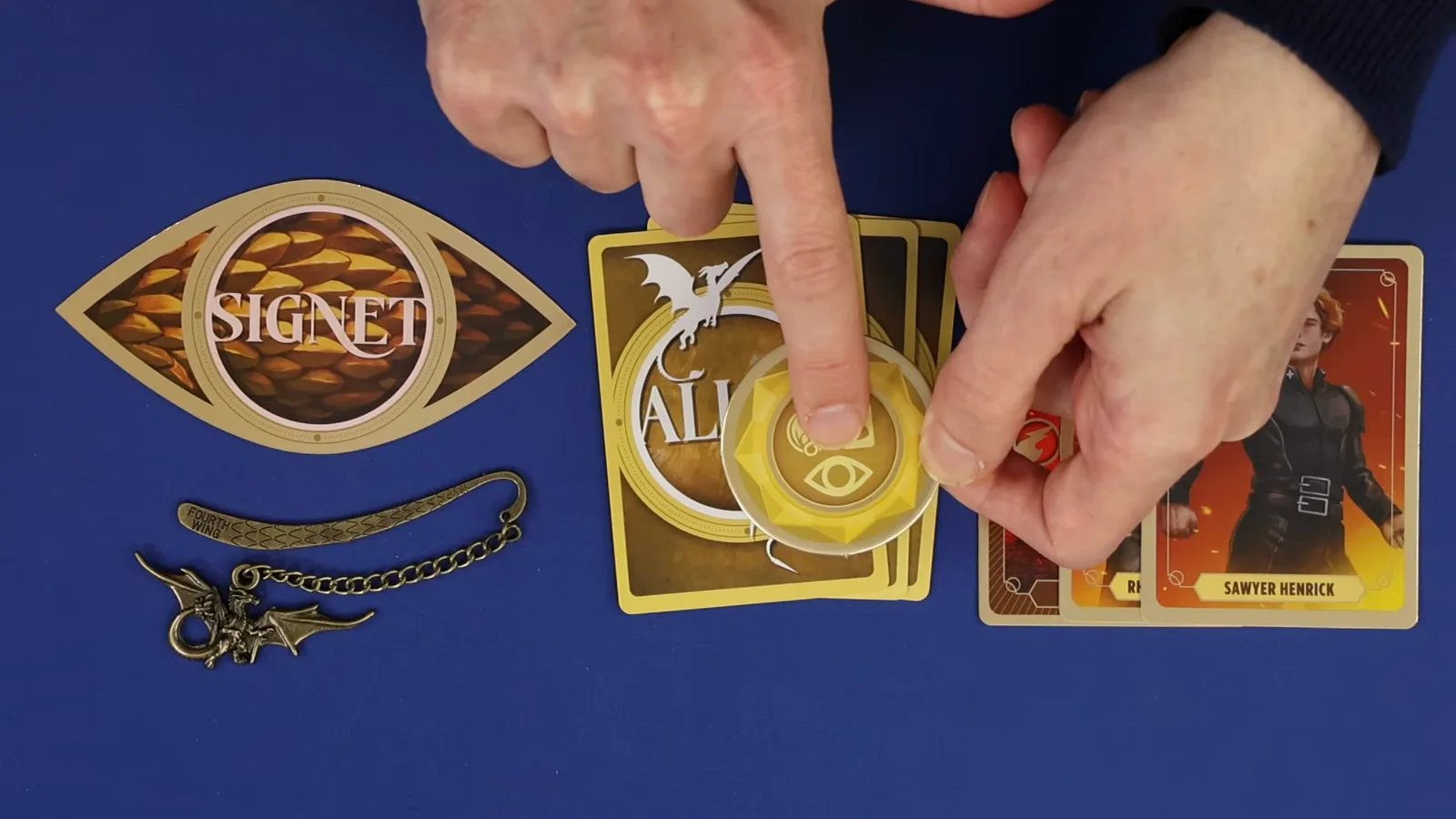
The eye token and its signet.
Injuries accumulate across rounds. One or two are normal wear for a cadet, but a third injury means your character dies and you are out of the game entirely.
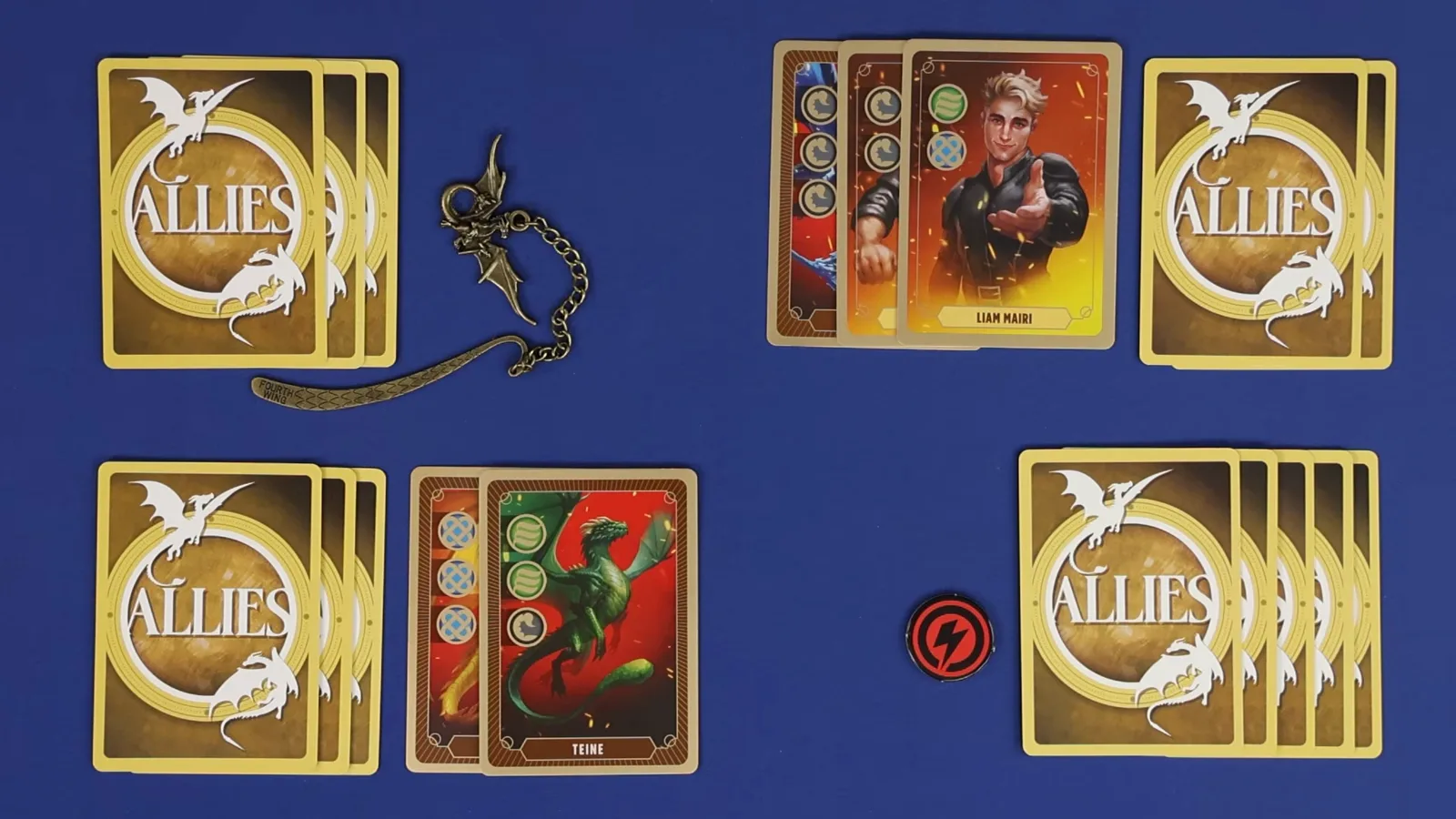
The cost of folding into danger.
Ending the Game and Solo Mode
The endgame triggers the moment any player’s dragon marker completes a lap of the track and reaches or passes the starting space. Finish the current round under normal rules, then count glory: the cadet who advanced furthest — the one with the most glory — wins. Between rounds, return the claim tokens to their quadrants, replace the event card, deal two new ally cards to each player, and move the bookmark one player clockwise. When no claim tokens remain in a round, anyone still in must fold to close it out.
Late-game positions on the track.
The video teaches the multiplayer game only, and it confirms that the standard box includes a solo mode. Solo-specific setup does not appear in the sources we checked, so treat the solo rules as something the game’s own rulebook covers.
Where to Go Next
- New to the world? Start with what Threshing Day is, then try the free Dragonkind browser game.
- If the game pulls you into the books, compare every edition of Threshing Day or check where to buy the book.
- To slot the collection into the series, see our reading-order guide.
Related Articles
Dragons
Fourth Wing Dragon Types: Colors, Tails, Signets
Every dragon type in Fourth Wing explained: why dragons bond riders, how Presentation and the Threshing work, all six colors, five tail types, and signets.
Book
Threshing Day Editions: Deluxe vs Standard, Audio
Every Threshing Day edition compared: color deluxe vs standard, the UK limited deluxe, eBook, full-cast audiobook, and the dramatized audio adaptation.
Book
Field Guide to Dragonkind: Kaori's Quotes & Rules
Colonel Kaori's Field Guide to Dragonkind is an in-world book quoted in Empyrean chapter epigraphs. What it says about each dragon color, with sources.
Was this helpful?
Thanks for the feedback!